

Hamburg is home to 4,500+ tech companies – and the competition for IT talent is fierce. The city has quietly evolved into one of Germany’s most dynamic digital economies, powered by a rare combination of logistics-tech innovation, a thriving gaming sector, established fintech players, and one of Europe’s strongest media-tech ecosystems. Bertelsmann, About You, XING, and Statista call Hamburg home. So do hundreds of fast-scaling startups that need engineers yesterday.
But the demand for skilled IT professionals runs well ahead of supply. Hiring managers across Hamburg consistently report the same frustration: strong candidates disappear within days of entering the market, salary expectations are rising sharply, and traditional recruitment approaches – job boards, internal sourcing, generic staffing agencies – simply aren’t moving fast enough.

That’s where a specialist IT recruitment partner makes the difference. This guide breaks down Hamburg’s tech hiring landscape in full: the roles companies are struggling to fill, what recruitment actually costs, how the best agencies operate, and what to look for when choosing one. If you’re trying to hire IT professionals in Hamburg, this is where to start.
Why Hamburg Is One of Germany’s Most Competitive IT Markets
Hamburg doesn’t have Berlin’s startup mythology or Munich’s corporate prestige – but it doesn’t need either. The city has built a tech market on real commercial foundations, and that makes it deeply competitive for talent.
The anchor company’s matter. Airbus’s digital operations, Otto Group’s e-commerce technology arm, and About You’s rapid engineering expansion have established Hamburg as a serious tech employer – not just a startup scene. These businesses attract strong senior talent and set salary benchmarks that the entire market orbits around.
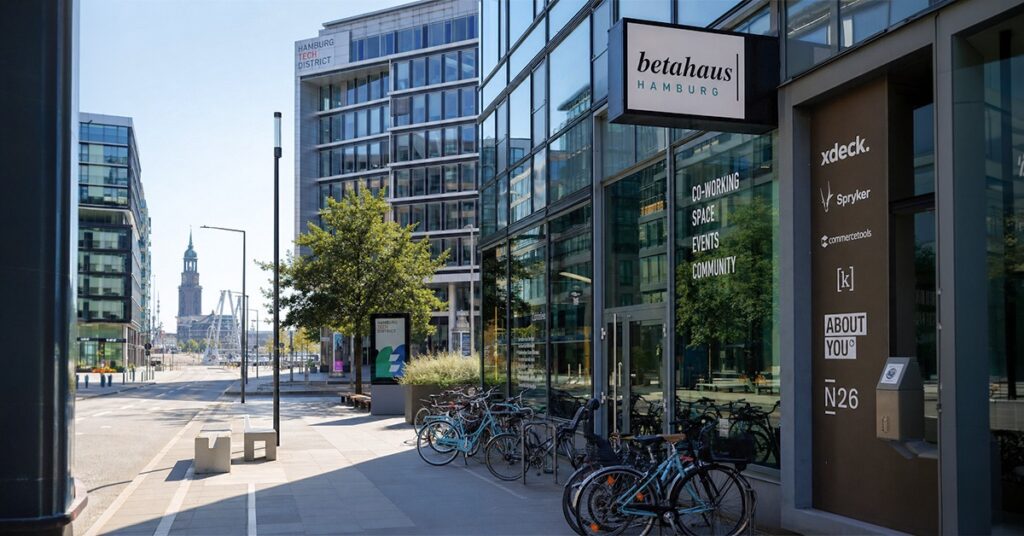
The startup density is real. Hamburg’s startup ecosystem ranks consistently among Germany’s top three, with particular strength in logistics-tech (driven by the port economy), fashion-tech, and SaaS. Over 700 active startups were operating in Hamburg as of recent estimates, competing with enterprises for the same pool of engineers.
The talent gap is acute. Germany faces a national shortage of over 137,000 IT professionals, according to Bitkom’s annual workforce analysis. Hamburg feels this proportionally – and sometimes more acutely, because companies here often need highly specialised profiles: engineers who understand supply chain logistics, data scientists with e-commerce domain knowledge, or DevOps specialists comfortable in regulated fintech environments.
Relocation adds complexity. Hamburg is attractive to international candidates — strong quality of life, excellent transport links, and a growing English-speaking professional community. But hiring non-EU talent involves navigating Germany’s EU Blue Card process, which requires minimum salary thresholds (currently €43,800 gross annually for most IT roles, lower for shortage occupations) and employer-side documentation. Most internal HR teams aren’t equipped to manage this efficiently. A specialist IT recruitment agency in Hamburg handles this as standard.
The combination of strong demand, limited local supply, rising salaries, and visa complexity is why companies that try to hire IT talent in Hamburg without specialist support consistently struggle.
What Does an IT Recruitment Agency in Hamburg Actually Do?
The short answer: a specialist IT recruiter does far more than post a job ad and forward CVs. In a tight market like Hamburg’s, the real value is in accessing candidates who aren’t actively looking – and then converting them efficiently.
Here’s how a structured IT recruitment process actually works:
1. Role Definition and Market Benchmarking
The process starts before any sourcing happens. A good IT recruiter works with your hiring manager to define the role precisely – required vs. desirable skills, team fit, growth trajectory – and benchmarks the package against current Hamburg market rates. Misaligned salary expectations kill more Hamburg tech hires than anything else.
2. Active Sourcing of Passive Candidates
Hamburg’s strongest IT professionals typically aren’t browsing job boards. Recruiters reach them through direct LinkedIn outreach, XING (still widely used in Germany for professional networking), specialist tech communities, GitHub, and cultivated candidate networks built over years of operating in the market.
3. Technical Pre-Screening
Before any CV reaches a hiring manager, candidates go through structured technical screening: stack-specific questions, problem-solving exercises, or code reviews depending on the role. This ensures the shortlist contains genuinely qualified candidates, not just keyword matches.
4. Candidate Presentation and Interview Management
Recruiters coordinate the full interview pipeline – scheduling, feedback collection, candidate prep, and expectation management on both sides. In Hamburg’s competitive market, speed matters enormously. Delays at the interview stage are the single most common reason strong candidates drop out.
5. Salary Negotiation and Offer Management
Negotiating offers in a candidate-driven market requires real data and experience. A specialist recruiter knows the Hamburg benchmarks precisely and helps both sides reach agreement without inflating offers unnecessarily or losing candidates to counter-offers.
6. Visa and Permit Support
For international candidates, the agency coordinates EU Blue Card documentation, employer letters, and timeline management – significantly reducing the administrative burden on the hiring company.
7. Post-Placement Follow-Up
The best IT recruitment agencies in Hamburg don’t disappear after the offer is signed. Structured check-ins during the first 90 days catch integration issues early and protect both the hire and the client relationship.
Top IT Roles Recruited in Hamburg – What Companies Are Hiring For
Hamburg’s hiring demand is concentrated in roles that reflect the city’s dominant industry verticals. These are the positions Tedoka recruits for most frequently – and where competition for candidates is sharpest.
| Role | Primary Industry Vertical | Typical Hamburg Salary Range | Demand Level |
| Software Engineers (Java, Python, Go) | E-commerce, Logistics-Tech, SaaS | €65,000 – €100,000 | Very High |
| Cloud & DevOps Engineers | All sectors | €70,000 – €110,000 | Very High |
| Data Scientists / ML Engineers | Fintech, E-commerce, Logistics | €65,000 – €105,000 | High |
| Frontend / Full-Stack Developers | Gaming, Media-Tech, E-commerce | €55,000 – €90,000 | High |
| IT Project Managers | Enterprise, Logistics | €60,000 – €95,000 | Moderate–High |
| Cybersecurity Specialists | Fintech, Enterprise | €70,000 – €115,000 | High |
| Data Engineers | Logistics-Tech, E-commerce | €65,000 – €100,000 | High |
Software engineers remain the most-requested profile across all sectors – particularly those with Java or Python experience in backend systems. Cloud and DevOps engineers are in exceptional demand as Hamburg’s enterprise firms accelerate cloud migration programmes. Data roles are growing fastest in logistics-tech, where companies like Hapag-Lloyd and Jungheinrich are investing heavily in predictive analytics and supply chain optimisation.
Hamburg’s gaming sector – anchored by studios including InnoGames and Goodgame Studios – creates consistent demand for frontend and game-client engineers with Unity or Unreal experience. This is a vertical where generalist recruitment firms routinely struggle and specialist knowledge makes a measurable difference.
Hamburg vs Other German Tech Hubs – How IT Hiring Differs
Understanding Hamburg in context helps companies calibrate expectations — and helps international candidates make informed relocation decisions.
| Hamburg | Berlin | Munich | Frankfurt | |
| Talent Density | High, concentrated | Very High, fragmented | High | Moderate |
| Avg. Senior Dev Salary | €80–95k | €75–90k | €85–100k | €80–95k |
| Market Character | Startup + Enterprise | Startup-dominant | Enterprise + Deep Tech | Finance + Consulting |
| Relocation Appetite | High | Very High | Moderate | Moderate |
| Hiring Speed (typical) | 4–8 weeks | 3–6 weeks | 6–10 weeks | 6–10 weeks |
| Key Strength | Logistics-Tech, Gaming | SaaS, Creative Tech | Automotive, MedTech | Fintech, RegTech |
Hamburg sits in an interesting position: salaries are competitive with Berlin (often surprising to candidates who assume Berlin leads) while offering a significantly higher quality of life – lower cost of living, shorter commutes, and a more established family-oriented infrastructure. This makes Hamburg genuinely attractive to mid-career and senior engineers, particularly those relocating from outside Germany.
Compared to Munich, Hamburg tends to move faster in hiring and offers a more accessible market for startups and scale-ups that can’t compete with BMW or Siemens on compensation packages. The talent is there – it just requires the right recruitment approach to reach it.
Our full analysis of IT recruitment across Germany covers how Hamburg’s dynamics compare to the national picture in more detail.
How Tedoka Recruits IT Professionals in Hamburg
Tedoka isn’t a generalist staffing agency that happens to fill IT roles. Our Hamburg operation is built specifically for technical recruitment in this market — and the methodology reflects that.
Step 1: Market Intelligence First
Before we open a search, we assess Hamburg’s current candidate availability for your specific role. We know which companies are actively hiring (and therefore restricting candidate movement), where the talent concentrations are across Hamburg’s tech verticals, and what a realistic time-to-hire looks like given current market conditions. This briefing shapes everything that follows.
Step 2: Multi-Channel Active Sourcing
Our Hamburg candidate network has been built over years of operating in this market. We source across LinkedIn Recruiter, XING Premium (critical for reaching candidates who aren’t active on LinkedIn), niche tech communities (Discord servers, Slack groups, Stack Overflow Talent), specialist forums, GitHub profiles, and direct referrals from our placed candidates. For senior and rare-profile roles, we also work with Hamburg’s university network and coding bootcamps for emerging talent pipelines.
Step 3: Technical Validation
Every candidate goes through role-specific technical screening before being presented to you. For engineering roles, this includes stack-specific discussions, problem-solving scenarios, and code review. For data roles, we assess statistical reasoning and tool proficiency. We don’t send you CVs to filter – we send you a shortlist of technically validated candidates.
Step 4: Managed Interview Process
We coordinate the full interview pipeline. In Hamburg’s market, our typical time-to-first-shortlist is 5–10 business days. Time-to-offer (first contact to signed offer) typically runs 4–7 weeks for permanent roles, depending on your interview stages and decision-making speed. We actively manage candidate engagement throughout – the biggest dropout risk in tech hiring is a slow process, and we don’t let momentum stall.
Step 5: Offer, Acceptance, and Onboarding Support
We handle offer negotiation with Hamburg salary data as our reference point, manage counter-offer conversations, and coordinate visa documentation for international hires. After placement, we run structured check-ins at 30, 60, and 90 days to monitor integration and flag any concerns early.
What makes Tedoka’s Hamburg approach different from a generic recruiter is specificity: we understand the technical stacks, the industry verticals, the candidate motivations, and the market rhythms. That specificity is what reduces your time-to-hire and improves placement quality.
IT Recruitment Costs in Hamburg – What to Budget For
Pricing transparency matters. Here’s a clear breakdown of how IT recruitment in Hamburg is typically structured – and whether it’s worth it.
Contingency (No-Win, No-Fee) Model
The most common arrangement for permanent placements. You pay a fee only when a candidate is placed. Typical fees for IT roles in Hamburg range from 15% to 25% of the candidate’s annual gross salary, depending on role seniority and scarcity. A €80,000 software engineer placement would typically carry a fee of €12,000–€20,000.
Retained Search Model
Used for senior, specialist, or confidential roles where deeper market mapping is required. A portion of the fee is paid upfront (typically one-third), with the remainder due on placement. Retained searches allow recruiters to invest more heavily in passive candidate outreach and are better suited for Director-level or highly specialised technical profiles.
Flat-Fee / Subscription Models
Some agencies offer volume arrangements for companies with ongoing hiring needs. These can reduce per-hire costs significantly for organisations scaling rapidly.
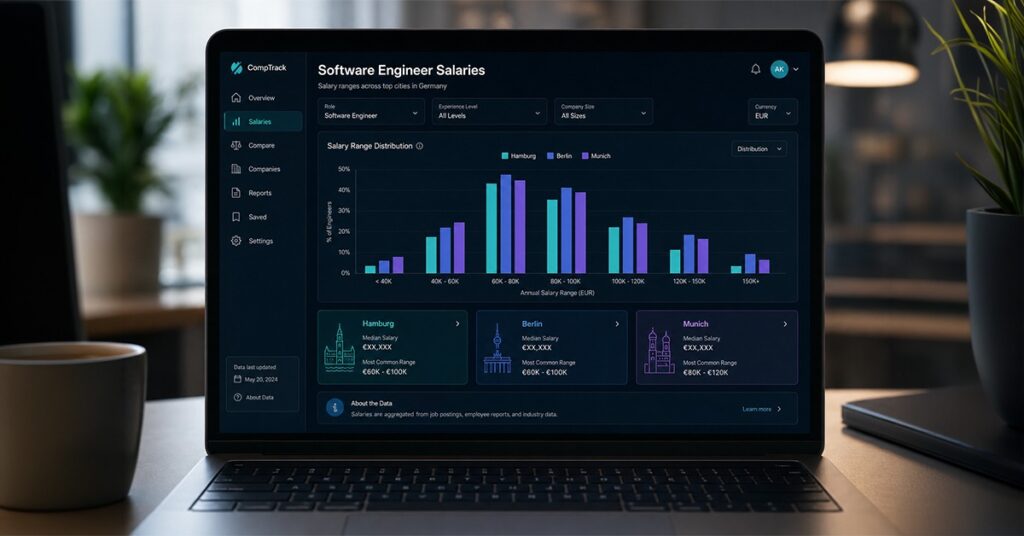
Hamburg IT Salary Reference Points (2024–2025)
-
- Junior Developer: €42,000 – €58,000
-
- Mid-level Software Engineer: €60,000 – €80,000
-
- Senior Software Engineer: €80,000 – €100,000+
-
- Cloud / DevOps Engineer (Senior): €85,000 – €115,000
-
- Data Scientist (Mid–Senior): €65,000 – €105,000
Is the agency fee worth it?
The calculation is straightforward. A bad hire – someone who leaves within 12 months or underperforms – typically costs 1.5–2x their annual salary when you factor in lost productivity, re-recruitment, onboarding, and team disruption. A recruiter fee is a fraction of that risk. More practically: every week a technical role sits vacant costs your team capacity. In Hamburg’s market, roles filled through direct hiring typically take 12–18 weeks. Specialist IT recruiters routinely halve that timeline.
For a detailed national pricing comparison, see our IT recruitment cost guide for Germany.
Permanent vs Contract IT Recruitment in Hamburg – Which Model Fits?
Hamburg’s IT talent market supports both permanent and contract hiring – and understanding which model fits your situation is worth thinking through before you start.
Permanent Placement
The right choice for core team members, roles requiring deep institutional knowledge, and positions where continuity matters. Permanent hires build internal capability over time and are better suited for companies building product. The trade-off is a longer hiring process and a higher upfront recruitment cost.
Contract / Freelance Staffing
Hamburg has a growing and active contractor market, particularly in logistics-tech and e-commerce – sectors where project-based delivery is the norm. Contract staffing is the right model when you need to staff a specific project quickly, fill a capability gap while hiring permanently, or scale delivery capacity without adding headcount. Day rates for senior IT contractors in Hamburg typically range from €500–€900 depending on specialism.
When to consider contract-first
Many Hamburg companies use a “contract-to-permanent” approach: bring in a contractor, evaluate fit, then convert. This works well when you need to move fast but aren’t ready to commit to a permanent hire, and it’s a model Tedoka supports explicitly with contract and permanent placement services running in parallel.
The decision often comes down to company size and stage: early-stage startups frequently benefit from targeted contract work to ship product faster, while scaling and enterprise firms typically prioritise permanent hires to build durable internal teams.
What to Look for When Choosing an IT Recruiter in Hamburg
Choosing an IT recruitment agency is a procurement decision — and like any procurement, it’s worth asking the right questions before you commit.
1. Do they have Hamburg-specific market knowledge?
Not Germany-wide knowledge. Hamburg-specific: which companies are actively hiring, what current salary benchmarks look like by role and level, which candidate communities are active here. Generic recruiters often lack this depth.
2. Do they have genuine technical specialisation?
Can they screen candidates technically before presenting them? Do they understand the difference between a backend Python engineer and a data engineer? Technical depth in the recruitment team directly determines shortlist quality.
3. What does their candidate network actually cover?
How long have they been operating in Hamburg? How many placed candidates are actively referring into their network? A recruiter with three years of Hamburg placements has a qualitatively different network than one operating nationally from Frankfurt.
4. Are their fee structures transparent?
Reputable agencies share their fee model clearly upfront. If pricing is vague or conditional, that’s a red flag.
5. Do they have sector experience in your vertical?
An agency with logistics-tech or gaming sector experience will find better-fit candidates faster than a generalist. Domain knowledge in the recruitment team translates directly to better briefs and more relevant sourcing.
6. Can they support international candidates and EU Blue Card processes?
Hamburg hires from across Europe and beyond. If your potential recruiter can’t explain the Blue Card pathway clearly, they’re not set up to access international talent effectively.
7. What’s their track record in your specific role categories?
Ask for case studies or reference placements – not general testimonials but specific examples of similar roles filled in Hamburg. What was the time-to-hire? What was the placement retention rate after 12 months?
For a full guide to evaluating IT recruitment partners nationally, see our guide to choosing an IT recruitment company in Germany.
FAQs About IT Recruitment in Hamburg
How long does IT recruitment typically take in Hamburg?
For permanent IT roles, expect 4–8 weeks from brief to signed offer when working with a specialist recruiter. Direct hiring typically takes 12–18 weeks. Senior or highly specialised roles (principal engineers, cybersecurity architects) can take longer regardless of approach. Timelines shorten significantly when clients move quickly through interview stages.
Can IT recruiters in Hamburg help with EU Blue Card applications?
Yes – specialist IT recruiters routinely coordinate EU Blue Card applications for international candidates. This includes confirming salary eligibility (minimum €43,800 gross for most IT roles in 2024), preparing employer documentation, and advising candidates on the application timeline. It’s a meaningful differentiator between specialist and generalist agencies.
What IT roles are hardest to fill in Hamburg right now?
Cybersecurity specialists, senior Cloud/DevOps engineers, and ML engineers with production experience are consistently the hardest to fill in Hamburg. These profiles are in short supply nationally, and Hamburg’s competition with Berlin and Munich for the same candidates makes the search more complex.
Is Hamburg a good market for international IT professionals?
Yes – Hamburg is one of Germany’s more internationally accessible tech markets. The professional community is growing more English-speaking, the quality of life is high relative to cost, and the variety of employers (from global enterprises to fast-growing startups) creates strong career optionality. The EU Blue Card pathway is well-established for qualified IT professionals from outside the EU.
Do Hamburg IT recruiters work on a no-win, no-fee basis?
Most contingency recruitment for permanent roles operates on a no-placement, no-fee basis. You pay only when a candidate is successfully placed and starts employment. Some agencies include a probationary period guarantee – if the candidate leaves within 90 days, a replacement search is conducted at reduced or no additional cost.
What is the average software developer salary in Hamburg?
Mid-level software developers in Hamburg earn between €60,000 and €80,000 gross annually. Senior developers with 6+ years of experience and strong specialisation typically command €80,000–€100,000+. Stack matters: Go and cloud-native engineers’ trend toward the upper end; PHP and legacy-stack generalists sit lower. These figures are current as of 2024–2025 and shift with market demand.
How is IT recruitment in Hamburg different from Berlin?
Berlin’s market is larger and faster-moving, with more startup-stage candidates and higher tolerance for equity-heavy compensation. Hamburg’s market is slightly smaller but often more stable – candidates here tend to have stronger enterprise or scale-up experience, and average tenures are longer. Hamburg salaries are competitive with Berlin and often more negotiable at senior levels. See our Berlin IT recruitment page for a direct comparison.
Can startups afford IT recruitment agencies in Hamburg?
Yes, and the calculation typically favours using one. A startup that hires the wrong senior engineer wastes months and significant capital on severance, rehiring, and lost delivery time. Contingency fees (payable only on placement) mean there’s no upfront outlay, and the right recruiter reduces time-to-hire significantly – which matters enormously when you’re scaling fast and every engineering sprint counts.
What sourcing channels do Hamburg IT recruiters use?
The primary channels are LinkedIn Recruiter, XING (heavily used for German-market candidates), direct network referrals, specialist tech communities (Discord, Slack, GitHub), and proprietary candidate databases built through previous placements. The best Hamburg recruiters also maintain relationships with local tech meetup communities and university networks for emerging talent.
How do I know if a Hamburg IT recruiter has the right technical knowledge?
Ask them to explain the difference between two technical roles relevant to your hiring – for example, a DevOps engineer vs a Platform engineer, or a data scientist vs a data engineer. A recruiter with genuine technical depth will give you a clear, specific answer. One without it will give you a vague or generic response. The quality of their screening questions for your team is equally telling.
Ready to Hire IT Professionals in Hamburg? Let’s Talk.
Hamburg’s IT talent market is competitive, fast-moving, and unforgiving to companies that approach it with generic strategies. The companies that hire well here – and hire quickly – work with partners who understand this market at a granular level: the salary benchmarks, the candidate communities, the industry verticals, and the process discipline required to close strong candidates before competitors do.
Tedoka is that partner. We’re a specialist IT recruitment agency operating across Hamburg and Germany, with deep technical knowledge, an active Hamburg candidate network, and a track record placing engineers, data professionals, and tech leaders across logistics-tech, fintech, e-commerce, gaming, and enterprise IT.