
Specialist IT recruiters connecting Munich’s enterprise and deep-tech companies with pre-vetted IT professionals.
Why Munich Is Germany’s Hardest City to Hire IT Talent In
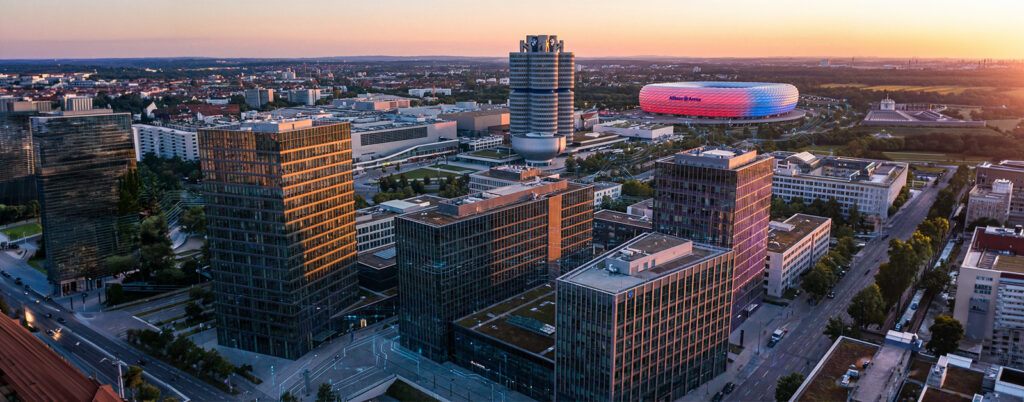
Munich’s tech sector grew 27% in five years. That is remarkable by any measure – but it creates a specific kind of hiring headache. The same pool of senior engineers that a scale-up or mid-sized ISV is chasing is also being chased by BMW, Siemens, Allianz, and MAN. These employers offer structured careers, above-market salaries, generous pension schemes, and – critically – job security that smaller employers simply cannot match on paper.
That dynamic makes Munich different from Berlin, Hamburg, or Frankfurt. Berlin’s market is younger, more mobile, and more open to startup risk. Munich’s is older on average, more settled, and far more enterprise-oriented. Candidates here have options, and they know it. Average IT salaries in Munich run 12–18% higher than the German national median, and candidate notice periods – often three months – mean that when someone accepts your offer, you are still weeks away from them starting.
Add the Bavarian preference for in-person relationships, the stronger German-language requirement in most enterprise environments, and the hyper specific automotive-tech skills that dominate local demand, and you have a hiring market that rewards patience, local knowledge, and specialist networks – not volume job boards and generic outreach.
This guide walks you through everything that matters: how IT recruitment in Munich actually works, what to look for in an agency, what it costs, and which roles are moving fastest right now. If you want to hire smarter – not just faster – keep reading.
What Does an IT Recruitment Agency in Munich Actually Do?
The short answer: a specialist IT recruiter takes every high-friction part of hiring off your plate. The longer answer requires understanding the full recruitment lifecycle — and the Munich-specific nuances that make each stage harder than it looks.
Here is how the process runs from brief to hire:
-
- Role briefing. The recruiter works with your hiring manager to pin down the exact technical requirements, seniority level, team context, and – critically – the salary band and flexibility. In Munich, being off-market on salary by even €5,000 will cost you candidates.
-
- Talent mapping. The recruiter draws on their active candidate database and network contacts to identify who is genuinely open to a move — not just who has updated their LinkedIn. Passive candidates make up the majority of senior hires in Munich’s market.
-
- Technical screening. Candidates are assessed on both hard skills (stack fit, system design, problem-solving) and soft criteria (German-language level, culture alignment, notice period, location willingness). A good recruiter kills mismatches here, not after three rounds of interviews.
-
- Shortlist presentation. You receive a curated list – typically three to six candidates – with structured profiles, screening notes, and recruiter commentary. Not a CV dump.
-
- Interview coordination. The recruiter manages scheduling across your panel and the candidate’s calendar, preps both sides, and collects structured feedback at each stage.
-
- Offer support. Salary negotiation in Munich is expected. A recruiter who knows local benchmarks will advise both parties on where the deal is fair – and where it risks falling apart.
-
- Onboarding handover. The best agencies stay engaged through day one, managing the candidate’s resignation process and flagging any counter-offer risk during the notice period.
Fee models differ depending on mandate type. Contingency recruitment means the agency is only paid on a successful placement – typically 15–25% of the candidate’s first-year base salary. Retained search involves an upfront payment and milestone fees for senior or critical hires where exclusivity matters. RPO (Recruitment Process Outsourcing) embeds a recruiter into your team for ongoing, high-volume hiring.
In Munich, retained and RPO arrangements are common at enterprise level because the market is tight enough that half-hearted contingency approaches consistently fail to deliver.
Why Munich’s IT Talent Market Demands a Specialist Recruiter
General IT recruitment agencies work fine in markets with broad, transferable talent pools. Munich is not that market. The city’s largest employers – BMW Group, Siemens AG, Allianz, MAN Truck & Bus, and a dense cluster of Tier-1 automotive suppliers – absorb a disproportionate share of senior technical talent. When these organisations run internal hiring campaigns or hire through their preferred vendor lists, they move with resources that most agencies cannot match.

The result: a senior Embedded Systems Engineer with eight years of AUTOSAR experience is not sitting idle on a job board. They are already at BMW, receiving internal retention packages, and not particularly interested in your InMail.
This structural tension is what makes generalist agencies struggle in Munich. They do not have the embedded relationships, the passive candidate pipelines, or the technical credibility to have those off-market conversations. A specialist IT headhunter in Munich has spent years building exactly that network – and those are the conversations that produce placements.
Beyond the talent competition, Munich presents several hiring complexities that catch non-specialists off guard:
-
- German-language requirements are stricter than in Berlin. Many Munich enterprise environments – particularly in automotive, finance, and insurance — expect professional-level German from technical hires, not just conversational ability. Berlin’s startup scene is more accommodating of English-only candidates. Munich’s enterprise sector largely is not.
-
- Notice periods run long. Three months is standard for experienced engineers, and some senior roles carry six-month clauses. Hiring timelines need to be planned accordingly – and candidates need active management during that window to prevent counter-offers from landing.
-
- Automotive-tech skills are hyper specific. Demand for ADAS engineers, AUTOSAR architects, and embedded C++ developers is intense and geographically concentrated around Munich. These candidates know exactly what the market offers and evaluate roles accordingly.
-
- Bavarian work culture values stability. Candidates here are more conservative in their career decisions than their Berlin counterparts. Employer brand, team tenure, and growth trajectory matter more than ping-pong tables or Friday beers.
Munich’s average IT time-to-hire sits around 68 days – roughly 15 days longer than the German national average. For specialist roles in automotive software or cybersecurity, 90+ days is not uncommon. A specialist recruiter reduces that number substantially by compressing the search and screening phases.
What to Look for in an IT Recruitment Company in Munich
Not every agency with a Munich address is a Munich specialist. Before you commit to a partnership, evaluate candidates against these criteria:
-
- Deep tech stack coverage. The agency should be able to assess candidates across your specific domain – whether that is embedded C++, enterprise SAP, cloud-native infrastructure, or cybersecurity. If their team cannot hold a technical conversation about your stack, they will struggle to screen credibly.
-
- Active Munich candidate database. Ask directly: how many candidates in their network are Munich-based or actively seeking Munich roles? Agencies that primarily operate from Berlin or other cities and list Munich as a secondary market will not have the local depth you need.

-
- Local office or genuine regional presence. Munich hiring often involves in-person relationship-building. An agency with a physical Munich presence will attend local tech events, build face-to-face candidate relationships, and understand the local market from the inside.
-
- Proven enterprise client roster. Request client references – specifically from companies of a comparable size and sector to yours. Agencies experienced at scale-up hiring may not be equipped for enterprise procurement cycles or compliance requirements.
-
- Transparent fee model. The fee structure, replacement guarantee period, and payment terms should be stated clearly from the first conversation. Reputable agencies do not obscure these details.
-
- Bilingual recruiters. Your agency needs recruiters who are genuinely fluent in both German and English. In Munich’s enterprise market, German-language candidate relationships are non-negotiable for senior roles.
-
- Sector specialisation. Munich’s IT market spans automotive tech, fintech, Insurtech, manufacturing software, and enterprise SaaS. An agency with deep domain knowledge in your sector will understand the candidate landscape, salary expectations, and competitive dynamics specific to your hiring context.
Top IT Recruitment Companies in Munich – Comparison Table
The table below compares a selection of IT recruitment agencies operating in the Munich market across the criteria that matter most for enterprise and deep-tech hiring. Ratings are based on publicly available information and editorial assessment.
| Agency | Specialisation | Time-to-Shortlist | Fee Model | Munich Office | Languages |
| Tedoka | Enterprise, Automotive Tech, Fintech, Cybersecurity | 5–7 business days | Contingency & Retained | Yes | DE / EN |
| Agency B | Startup & Scale-up | 10–14 business days | Contingency | No (Berlin HQ) | EN only |
| Agency C | Generalist IT | 12–18 business days | Contingency | Yes | DE / EN |
| Agency D | Cloud & DevOps | 8–10 business days | Retained | No (Hamburg HQ) | EN only |
| Agency E | SAP & ERP | 10–15 business days | Contingency & RPO | Yes | DE / EN |
How Tedoka Recruits IT Professionals for Munich Companies
Tedoka operates as a specialist IT recruitment firm with deep roots in the Munich and wider Bavarian market. The focus is enterprise and scale-up hiring – not contingency CV-dropping, but structured search with genuine technical rigour at every stage.
The Munich talent network spans several thousand active and passive candidates across the city’s dominant tech sectors: automotive software and embedded systems, fintech and Insurtech, enterprise SaaS, cloud infrastructure, and cybersecurity. Candidates in the network have been engaged face-to-face, technically assessed, and remain in regular contact – which means Tedoka can move fast when a mandate lands.
Specialisms particularly relevant to Munich’s market:
-
- Automotive software — ADAS, AUTOSAR, embedded C/C++, functional safety (ISO 26262)
-
- Enterprise software — SAP S/4HANA, Java, Kotlin, .NET, system integration
-
- Cloud and infrastructure — AWS, Azure, GCP, Kubernetes, DevSecOps
-
- Fintech and Insurtech — Python, Scala, financial data engineering, regulatory compliance engineering
-
- Cybersecurity — SOC analysts, penetration testers, CISO-level executive search
Screening methodology: every shortlisted candidate passes a structured technical assessment appropriate to their role, a competency interview, and a cultural-fit discussion aligned to the client’s team environment. References are verified before presentation.
Average days-to-shortlist: 5–7 business days for roles with a defined brief and agreed salary band. Time-to-shortlist extends for highly niche mandates (e.g., AUTOSAR architects with ISO 26262 experience) but remains well below the Munich market average.
Representative results:
-
- Placed a team of six embedded engineers for a Tier-1 automotive supplier based in Munich within 28 days of mandate sign-off.
-
- Sourced and placed a Head of Cybersecurity for a Munich-based financial services firm in 19 days – a role that had been open for four months with a generalist agency.
-
- Delivered a full backend engineering team (eight engineers across Java and Kotlin) for a scale-up entering the German market, with 100% of hires meeting the client’s German-language requirement.
How Much Does IT Recruitment Cost in Munich?
IT recruitment fees in Munich follow three main pricing models. Which one applies depends on the nature of the hire, the urgency, and the level of exclusivity the client wants from the agency.
-
- Contingency recruitment: The agency is paid only when a candidate is placed and starts employment. Fees typically run 15–25% of the candidate’s first-year base salary. For a senior backend engineer at €85,000, that means a fee in the range of €12,750 to €21,250. Contingency works well for accessible roles with reasonable timelines — it carries no upfront cost and no risk if the hire does not materialise. The trade-off is that agencies running multiple contingency mandates simultaneously will prioritise the roles most likely to close quickly.
-
- Retained search: A portion of the agreed fee is paid upfront (typically one-third), with further payments tied to shortlist delivery and candidate acceptance. This model suits senior, niche, or business-critical hires where the client needs dedicated resource and genuine prioritisation. For a cybersecurity architect at €100,000 base, retained fees typically land between €18,000 and €28,000 total. The upfront investment buys a committed search – not a speculative one.
-
- RPO (Recruitment Process Outsourcing): An embedded recruiter or recruitment team operates within the client organisation on a monthly retainer or project basis. Best suited to companies scaling engineering headcount significantly (10+ hires per quarter), RPO models offer cost efficiency at volume and deep integration with internal HR processes.
-
- What pushes fees higher in Munich specifically: niche automotive or embedded skills, leadership-level technical hires, mandates with urgent timelines (sub-30-day fills), and roles requiring both German fluency and deep domain expertise. Munich salaries are consistently above the German median, which means percentage-based fees are correspondingly higher – but so is the cost of a mis-hire or a prolonged vacancy.
Request a no-obligation quote from Tedoka – fee structures are discussed openly in the first consultation, with no obligation to proceed.
Most In-Demand IT Roles in Munich Right Now
Munich’s hiring demand is shaped by the automotive industry, financial services, and a growing deep-tech ecosystem. The roles below represent the highest-volume and hardest-to-fill mandates in the current Munich market, with average gross salary ranges based on 2025 placement data.
Munich’s hiring demand is shaped by the automotive industry, financial services, and a growing deep-tech ecosystem. The roles below represent the highest-volume and hardest-to-fill mandates in the current Munich market, with average gross salary ranges based on 2025 placement data.
Munich’s hiring demand is shaped by the automotive industry, financial services, and a growing deep-tech ecosystem. The roles below represent the highest-volume and hardest-to-fill mandates in the current Munich market, with average gross salary ranges based on 2025 placement data.
| Role | Key Skills | Avg. Munich Salary (Gross) |
| Embedded Systems Engineer | C/C++, AUTOSAR, RTOS | €75,000 – €95,000 |
| Automotive Software Developer | ADAS, ROS2, Python, C++ | €80,000 – €105,000 |
| Cloud Architect | AWS, Azure, Terraform, Kubernetes | €90,000 – €120,000 |
| SAP Consultant (Senior) | S/4HANA, ABAP, FI/CO | €85,000 – €110,000 |
| Cybersecurity Analyst | SIEM, ISO 27001, Pen Testing | €70,000 – €95,000 |
| Data Engineer | Spark, dbt, Snowflake, Python | €75,000 – €100,000 |
| Backend Engineer | Java, Kotlin, Spring Boot | €75,000 – €95,000 |
| ML / AI Engineer | PyTorch, TensorFlow, MLOps | €85,000 – €115,000 |
| DevOps / SRE | Kubernetes, CI/CD, GitOps | €80,000 – €105,000 |
Note: Salary ranges reflect mid-to-senior experience levels. Rates for contractors and freelance professionals vary significantly and are available on request. Table updated quarterly.
How to Work with an IT Recruiter in Munich: Step-by-Step
Getting the most from an IT recruiter in Munich is less about handing over a job description and more about creating the conditions for a fast, clean hire. Here is the process that works:
-
- Define the role precisely before the brief. Know your must-haves versus nice-to-haves. A brief that says ‘Python or Java’ will produce a mixed shortlist. A brief that says ‘Python-first backend engineer, three years minimum in a distributed systems environment, SAP integration experience a strong plus’ will produce a focused one.
-
- Agree the salary band upfront – and be honest about it. Munich candidates are well-informed about market rates. If the band is below market, say so early so the recruiter can advise on how to address it (equity, flexibility, scope). Discovering the gap after two interview rounds wastes everyone’s time.

-
- Review the longlist collaboratively. The recruiter will typically present a longlist of candidates before filtering to a formal shortlist. Use this stage to calibrate: which profiles excite you and why? That feedback sharpens the shortlist considerably.
-
- Coordinate interviews efficiently. Munich’s candidate market is competitive. Candidates at shortlist stage are often in conversations elsewhere. A two-week gap between interview stages loses good people. Build a structured, time-efficient interview process before the search starts.
-
- Plan around Munich’s three-month notice norm. Most experienced engineers in Munich have a three-month notice period. The recruiter should manage the candidate actively during this window – counter-offer risk is real, and the notice period is when it typically emerges.
-
- Onboarding is part of the process. The hire does not close on offer acceptance. Check in during the notice period, share pre-boarding materials, and treat day one as a continuation of the candidate experience, not the end of it.
A Munich-specific tip: plan your hiring sprints around the local calendar. Oktoberfest (mid-September to early October) and the dense run of Bavarian public holidays in spring significantly affect candidate availability and interview scheduling. Agencies with genuine Munich presence will flag this for you automatically.
FAQs About IT Recruitment in Munich
How long does IT recruitment typically take in Munich?
Munich’s average IT time-to-hire sits around 68 days, though specialist roles – particularly automotive software, embedded systems, and senior cybersecurity – can run to 90 days or beyond. Working with a specialist recruiter who has an active local network compresses the search and screening phases significantly. Expect 5–7 business days to a qualified shortlist with an experienced agency, followed by 2–4 weeks of interviews and a further 3 months before your new hire starts (due to standard notice periods).
What is the average IT salary in Munich compared to other German cities?
Munich consistently sits at the top of the German IT salary table. Senior software engineers earn 12–18% more than the national median, and the premium is even wider for niche roles in automotive software, cloud architecture, and cybersecurity. Berlin offers comparable salaries in some sectors but generally runs 8–12% lower across the board. Munich’s higher cost of living partly explains the differential – but so does the concentration of enterprise employers competing for a limited talent pool.
Do Munich IT recruitment agencies handle visa and work permit support?
Most specialist IT recruitment agencies in Munich can advise on EU Blue Card eligibility, facilitate introductions to immigration lawyers, and guide candidates through the work permit process. However, formal visa sponsorship and legal immigration services are handled by the employer, not the recruiter. What a good agency will do is flag visa requirements early, only put forward candidates whose profile is compatible with the role’s requirements, and help manage the extended timelines that international hires involve.
How competitive is Munich’s tech talent market vs Berlin?
The two cities attract different candidate profiles and face different competitive dynamics. Munich’s market is harder in the enterprise and automotive-tech segments – the concentration of large employers, the stricter German-language requirements, and the conservative career culture make it significantly more competitive for senior hires. Berlin has a more mobile, internationally diverse talent pool with lower salary expectations on average. For companies that need both cities covered, different recruitment strategies are often required – a Berlin approach will not work in Munich.
What industries drive the most IT hiring in Munich?
Automotive and mobility technology is the dominant force – BMW, Audi (nearby Ingolstadt), Continental, and a dense supplier ecosystem generate massive demand for embedded engineers, ADAS developers, and functional safety specialists. Financial services (Allianz, Munich Re, HypoVereinsbank) drive demand for Java developers, data engineers, and cybersecurity professionals. A fast-growing Insurtech and fintech cluster is adding software development and ML engineering demand. Manufacturing software (Siemens Digital Industries, MAN) rounds out the picture, with SAP and enterprise integration skills consistently sought.
Can I hire contract or freelance IT professionals through a Munich agency?
Yes – most specialist IT recruitment agencies in Munich handle both permanent and contract placements. Contractor rates in Munich are among the highest in Germany, particularly for embedded systems, cloud architecture, and SAP consulting. Day rates for senior contractors typically range from €700 to €1,200 depending on specialism and experience. Contract engagements are particularly common in project-based automotive software work and enterprise IT transformations. Agencies manage the sourcing and contractor compliance side; the employer engages the contractor directly or through a payroll solution.
What is the difference between an IT headhunter and a recruitment agency in Munich?
The distinction is primarily about approach. A recruitment agency posts roles, manages inbound applications, and screens candidates who have already expressed interest. A headhunter (or executive search consultant) proactively approaches candidates who are not on the market – mapping organisations, identifying targets, and making direct approaches. In Munich’s tight senior tech market, the headhunting model is often necessary for roles above senior engineer level, where the best candidates are employed and not actively looking. Many specialist IT recruitment firms in Munich offer both approaches depending on the mandate.
How do Munich recruitment agencies screen technical candidates?
Screening rigour varies considerably by agency. At a minimum, expect a structured competency interview and a review of the candidate’s technical background. Specialist agencies go further: role-specific technical assessments, system design discussions, code review tasks for engineering roles, and in some cases independent technical interviewing by a domain expert. The key question to ask any agency is what percentage of shortlisted candidates go on to fail at the technical interview stage – a high failure rate indicates insufficient screening.
What is the EU Blue Card and how does it apply to IT hiring in Bavaria?
The EU Blue Card is a work and residence permit for non-EU nationals in highly qualified roles. For IT professionals in Bavaria, eligibility requires a recognised university degree and a minimum annual salary threshold – currently around €45,300 for shortage occupations including most IT roles, and around €56,400 for all other positions. The Blue Card allows holders to bring family members to Germany immediately and grants permanent residency eligibility after 21 months (for B1 German speakers) or 33 months. Munich employers can use the Blue Card to access a much wider international talent pool, though processing times add several months to the hiring timeline.
Is English enough to hire IT professionals in Munich, or is German required?
It depends entirely on the employer and the role. Munich’s international tech companies and scale-ups often operate in English and hire globally. But the majority of Munich’s enterprise sector – automotive, financial services, manufacturing – operates primarily in German, and candidates without professional-level German face significant barriers to day-to-day effectiveness. For most senior engineering roles at large Munich employers, a minimum of B2 German is expected, with C1 preferred. Roles that are international in nature (e.g., cloud platform teams, global cybersecurity functions) are more flexible. Clarifying the language requirement at the brief stage is essential – it has a major impact on the available candidate pool.
Ready to Hire IT Talent in Munich?
Munich is Germany’s most demanding IT hiring market — and, for the right candidates, its most rewarding. Salaries are higher, enterprise projects are larger, and the technical depth of the local ecosystem is unmatched outside a handful of global cities. But none of that makes hiring easy. It makes specialist support more valuable, not less.
Three things to take away from this guide: Munich is Germany’s highest-paying and most competitive IT market, where standard hiring approaches consistently underperform. Specialist recruiters with genuine local networks outperform generalist agencies here — not occasionally, but structurally. And Tedoka has the Munich candidate network, the technical screening rigour, and the sector expertise to deliver where it matters.
Whether you need a single embedded engineer or a full engineering team, the conversation starts the same way: a clear brief and an honest discussion about what the market looks like right now.